
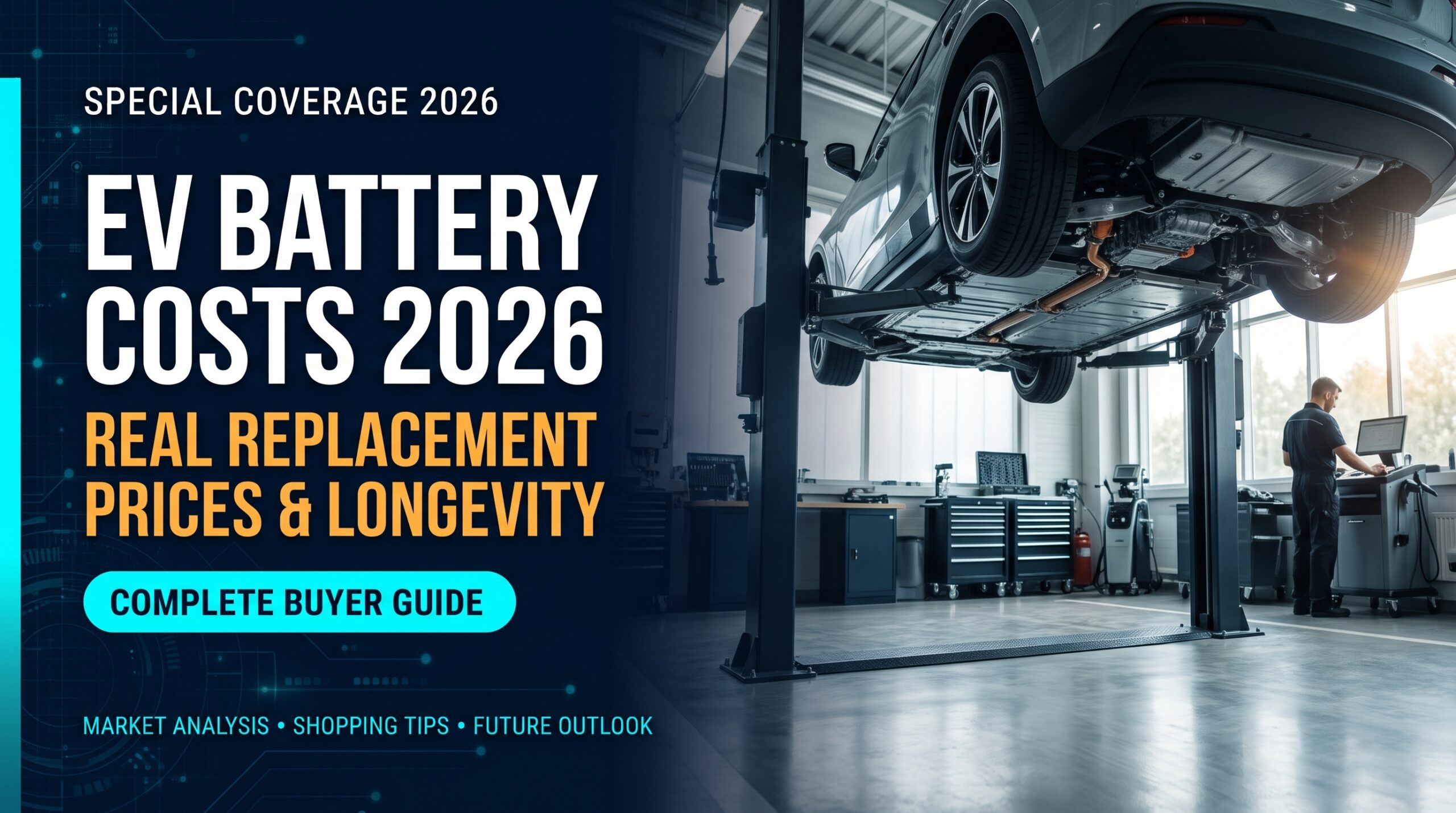
Worried about EV battery replacement costs? Discover real 2026 pricing, battery longevity facts, warranty coverage rules, and practical maintenance tips.
If you have ever thought about buying an electric car—especially a used model with a tempting price tag—one nagging worry probably stopped you in your tracks: what happens if the battery dies?
For years, horror stories have circulated across online forums about owners receiving surprise repair estimates topping $20,000 for a fresh battery pack. That single fear remains the number one reason many American drivers hesitate to make the switch away from gasoline, even as fuel prices climb.
The reality of electric vehicle battery costs in 2026 is far more nuanced than those viral headlines suggest. While replacing a massive lithium-ion pack is still one of the most expensive repairs in the automotive world, falling raw material prices, modular repair techniques, and strict federal warranty rules mean most drivers will never have to write a five-figure check out of pocket.
Real-World EV Battery Replacement Prices in 2026
To understand what a battery replacement actually costs, you have to separate pack size, vehicle luxury class, and whether you are buying brand-new parts from a dealership or opting for a remanufactured unit from an independent specialist.
On average, fully replacing an electric vehicle battery pack in 2026 ranges between $5,000 and $18,000, depending heavily on the vehicle’s battery capacity:
- Compact and Commuter EVs (40 kWh to 60 kWh): Out-of-warranty replacements typically run between $5,000 and $8,500 including labor.
- Mainstream Crossovers and Sedans (75 kWh to 85 kWh): Replacement costs generally range from $9,000 to $13,500 at authorized service centers.
- Full-Sized Electric Pickups and Luxury SUVs (100 kWh to 130 kWh+): Massive dual-motor battery packs can still climb from $15,000 to upwards of $22,000 due to sheer physical cell volume.
- Labor costs alone: Installing a high-voltage pack typically requires four to eight hours of specialized technician labor, adding $800 to $1,800 to the final bill.

Why Cell Pack Costs Have Dropped
The primary driver behind cooling battery prices is cell manufacturing efficiency. Over the past three years, the industrial cost per kilowatt-hour (kWh) at the cell level has declined toward the milestone mark of $100 per kWh.
Cheaper lithium iron phosphate (LFP) chemistry has also taken over mainstream entry-level electric cars. While LFP batteries are slightly heavier than traditional nickel-manganese-cobalt (NMC) packs, they are significantly cheaper to build, contain zero expensive cobalt, and can handle daily charging to 100 percent without rapid degradation.
How Long Do Modern EV Batteries Actually Last?
The biggest misconception among first-time electric car shoppers is assuming that a car battery degrades like a smartphone battery. After three or four years, most people are used to their phone battery dying by late afternoon.
Automotive battery systems are engineered on an entirely different level. Modern electric vehicles utilize complex liquid thermal management loops that circulate coolant between every individual cell to keep temperatures strictly between 60 and 85 degrees Fahrenheit, regardless of whether you are driving in a freezing Minnesota winter or a scorching Arizona summer.
Real Degradation Data Over 100,000 Miles
Real-world fleet telematics tracking hundreds of thousands of electric vehicles on American roads show that the average battery pack loses only about 1.5 to 2.0 percent of its total capacity per year.
For a car that starts with 300 miles of driving range, that means:
- After 5 years and 60,000 miles: You can reasonably expect around 270 to 275 miles of usable range remaining.
- After 10 years and 120,000 miles: The vehicle will typically retain around 240 to 250 miles of original range—more than enough for daily commuting and errands.
- Overall lifespan: Most automotive engineers project modern liquid-cooled battery packs to outlast the vehicle’s structural frame, easily reaching 150,000 to 200,000 miles before degradation impacts usability.
Understanding Your Federal 8-Year Warranty Protection
Before you lose sleep over repair estimates, check your vehicle’s warranty booklet. In the United States, federal emissions regulations legally require automakers to back every electric vehicle battery with an extensive long-term warranty.
Federal law mandates that automakers cover the high-voltage battery and all related electric powertrain components for at least 8 years or 100,000 miles (whichever comes first). In California and states that follow zero-emission vehicle guidelines, that coverage extends up to 10 years or 150,000 miles.
What Triggers a Warranty Replacement?
Most manufacturer warranties don’t just cover total sudden battery failure; they also protect against excessive degradation. If your dashboard diagnostics show that the battery pack’s total energy capacity drops below 70 percent within that 8-year or 100,000-mile window, the dealership is legally obligated to repair or replace the battery pack completely free of charge.
The Rise of Module Repairs and Third-Party Specialists
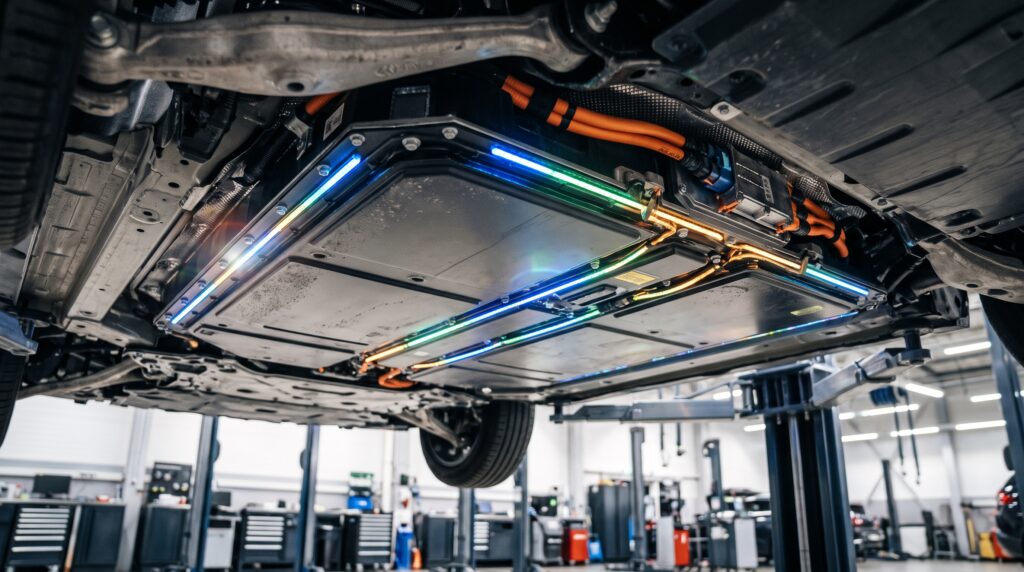
One of the most encouraging shifts in the 2026 automotive market is that technicians no longer have to throw away an entire 1,000-pound battery pack because a few cells failed.
An electric car battery isn’t one giant block; it is made up of dozens of individual modules connected in series. When a warning light appears on the dashboard, it is almost always caused by a single weak module or a faulty monitoring circuit board while 95 percent of the battery remains perfectly healthy.
Independent high-voltage repair shops can now drop the pack, run diagnostics, unbolt the bad module, install a refurbished replacement module for $1,200 to $2,500, and balance the pack to factory specifications. That saves drivers thousands compared to buying a full crate battery from a dealership.
4 Simple Habits to Maximize Your EV Battery Life
If you want your battery to last well past the 150,000-mile mark with minimal degradation, follow these four simple charging habits:
1. Follow the 80/20 Rule for Daily Driving
Unless your car specifically uses an LFP battery chemistry, avoid charging to 100 percent every single night. Setting your vehicle’s charge limit slider to 80 percent for daily commuting and only topping off to 100 percent right before long highway road trips significantly reduces chemical stress inside the cells.
2. Don’t Let the Battery Sit Below 10 Percent
Leaving an electric vehicle parked in a garage with an empty battery for days at a time can cause cell voltage to drop below critical thresholds. Try to plug in before your state of charge drops below 15 or 20 percent.
3. Use DC Fast Charging When Needed, Not Every Day
High-speed public chargers pumping 150 kW to 350 kW of direct current generate substantial heat. While modern thermal management keeps the pack safe, relying primarily on Level-2 home charging overnight at 7 kW to 11 kW is much gentler on long-term battery health.
4. Precondition the Battery in Cold Weather
During freezing winter mornings, use your vehicle’s mobile app to turn on cabin climate control and battery preconditioning while the car is still plugged into your wall charger. This warms up the battery chemistry using household electricity rather than drawing heavy energy from cold cells.