

Used car prices show resilience in late 2026 as hybrid demand surges and vehicle depreciation patterns shift. Discover real wholesale price data and smart buying tips.
If you have spent any time browsing online automotive marketplaces or walking through dealership pre-owned car lots over the past several months, you know that buying a secondhand vehicle in late 2026 is an entirely different experience than it was just a few years ago.
The dramatic price spikes and acute inventory shortages that defined the post-pandemic automotive landscape have officially stabilized into a mature, highly nuanced retail environment. Heading into November 2026, wholesale transaction data and consumer index benchmarks show that while overall used vehicle valuations have leveled off, strong consumer demand for fuel-efficient hybrid crossovers, elevated auto loan borrowing costs, and shifting vehicle depreciation curves have created a market where prepared buyers can find genuine value—provided they know where to look.
For everyday American households balancing transportation needs against monthly grocery bills and housing costs, purchasing a reliable late-model used vehicle remains one of the most significant financial decisions of the year. Understanding how wholesale vehicle auctions operate, recognizing which vehicle segments hold their value, and negotiating financing terms can save you thousands of dollars before you ever sign paperwork.
Breaking Down the Late 2026 Used Car Market Data
To understand where vehicle pricing stands as autumn draws to a close, it helps to examine wholesale and retail transaction data collected across thousands of independent and franchised dealerships nationwide.
The overarching market narrative in late 2026 is defined by stability with sharp divergence between different vehicle powertrains:
- Overall Used Vehicle Pricing Stays Resilient: Average retail transaction prices for three-to-five-year-old pre-owned vehicles have hovered near stable plateaus, easing only 1.2 percent year-over-year rather than experiencing the steep crash some analysts predicted.
- The Hybrid Powertrain Premium: Demand for hybrid compact SUVs and midsize sedans has surged to record highs. Because drivers want substantial fuel economy without committing to home charging stations, three-year-old hybrid models frequently command a $2,000 to $3,500 premium over their purely gasoline-powered counterparts.
- Electric Vehicle Depreciation Curves: In contrast to hybrids, used fully electric vehicles (EVs) have experienced the steepest depreciation in the pre-owned market. Rapid battery advancements in new models and aggressive price cuts on new inventory have caused two-to-three-year-old electric sedans to trade at steep discounts, creating remarkable bargains for budget-conscious commuter drivers.
- Inventory Supply Realignment: Dealership lots have rebuilt steady thirty-to-forty-five-day supplies of certified pre-owned vehicles, giving shoppers genuine negotiating leverage that simply did not exist during the peak supply crunch.

Why Borrowing Costs Dominate the Car Buying Conversation
While vehicle listing prices have stabilized, the monthly financial reality of purchasing a car in 2026 is dominated by interest rates.
With the Federal Reserve holding benchmark policy rates steady, commercial auto lending rates remain elevated compared to historical lows. The average interest rate for a used vehicle auto loan currently sits between 8.5 percent and 11.5 percent for prime borrowers, and can easily exceed 16 percent for subprime credit profiles.
This borrowing environment creates a mathematical reality that catches many shoppers off guard:
- The Monthly Payment Impact: On a $25,000 used car loan financed over 60 months at a 9.5 percent interest rate, the monthly payment comes out to approximately $525, with total lifetime interest payments exceeding $6,500.
- The Rise of Extended Loan Terms: To force monthly payments into manageable ranges, an alarming number of car buyers are opting for 72-month or even 84-month loan terms. While this lowers the immediate monthly payment, it drastically increases the total finance charge and leaves owners trapped in negative equity for years.
- The Power of Cash Down Payments: Putting down twenty to twenty-five percent in cash or trade-in equity acts as an immediate shield against high interest rates, lowering the total financed balance and keeping loan-to-value ratios safe from market depreciation.
How to Conduct a Bulletproof Pre-Purchase Inspection
In the modern used car market, a clean vehicle history report is merely the starting point of your research, not the final word.
A vehicle history database only records incidents that were formally reported through insurance claims, police reports, or participating repair facilities. Minor collisions repaired at independent body shops, deferred fluid maintenance, and hidden flood damage frequently escape official record checks entirely.
Before agreeing to purchase any secondhand car, follow this three-step verification checklist:
- Hire an Independent Mobile Mechanic: Never rely solely on a dealership’s internal “150-point inspection” checklist. Investing $150 to $200 to have an independent, certified ASE mechanic inspect the vehicle on a hydraulic lift is the single best investment you can make. A mechanic will check for oil seepage around timing covers, inspect brake pad thickness, and verify suspension bushing wear.
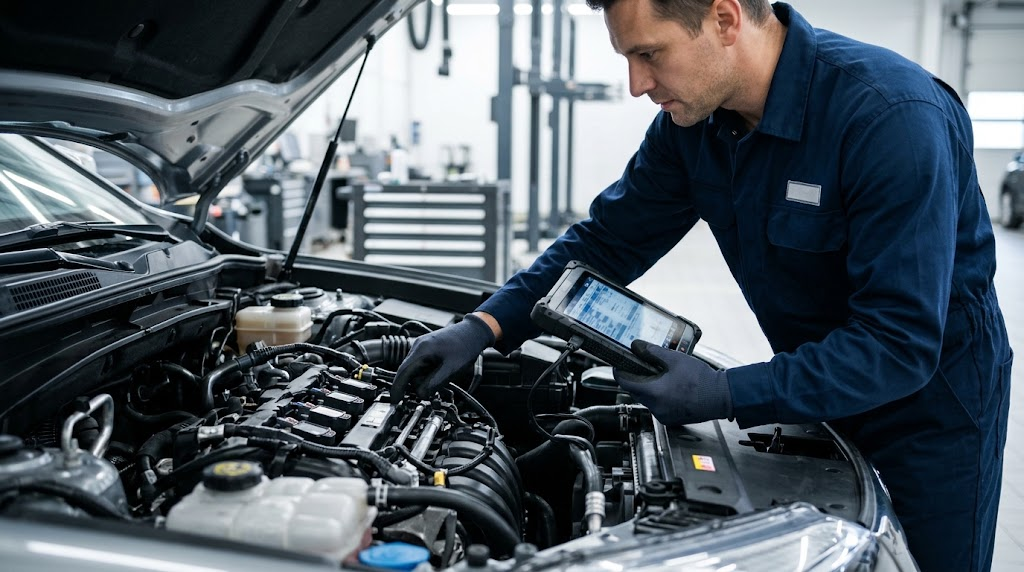
- Demand a Comprehensive On-Board Diagnostic Scan: Modern vehicles are rolling computers equipped with dozens of electronic control modules. A professional diagnostic scanner can detect hidden pending trouble codes, verify that emissions readiness monitors haven’t been freshly wiped to clear check engine lights, and inspect hybrid battery cell balance.
- Perform a Cold-Start Road Test: Always arrive at the dealership or private seller’s location with the vehicle engine completely cold. Starting a cold engine reveals telltale noises—such as valve train rattles, worn starter motors, or serpentine belt squeals—that disappear once an engine has been warmed up prior to your arrival.
Certified Pre-Owned (CPO) vs. Independent Inventory: Which Is Better?
When shopping at franchised dealerships, you will frequently see vehicles labeled as Certified Pre-Owned (CPO). Understanding whether the CPO badge warrants its higher price tag requires evaluating manufacturer warranty coverage.
Certified pre-owned vehicles typically undergo factory-mandated multi-point inspections and come backed by extended manufacturer powertrain warranties:
- The CPO Advantage: Manufacturer-backed CPO programs extend original bumper-to-bumper and powertrain warranties by an additional twelve months to two years, often including 24/7 roadside assistance and trip interruption coverage. Furthermore, captive auto lenders frequently offer subsidized, lower interest rates on certified vehicles to compete with new car promotions.
- The Independent Lot Alternative: Independent used car dealers often price comparable vehicles $1,500 to $2,500 lower than franchised CPO inventory. If you are handy with mechanical maintenance or plan to purchase a vehicle with a proven, bulletproof reliability record (such as an older naturally aspirated four-cylinder sedan), buying non-CPO and saving the upfront premium often makes better financial sense.

4 Savvy Negotiation Strategies for Late 2026 Buyers
Walking into an automotive showroom prepared with market knowledge gives you immediate leverage over sales staff. Implement these four negotiation strategies to secure the best possible deal:
1. Secure Independent Pre-Approved Financing First
Never let the dealership finance and insurance (F&I) office be your only lending option. Secure a written pre-approval letter from your local credit union or community bank before stepping onto a car lot. Having a verified 7.5 percent loan offer in your pocket forces the dealership’s finance manager to beat that rate or forfeit the financing commission.
2. Negotiate the Out-the-Door (OTD) Price Exclusively
Dealership salespeople frequently steer conversations toward “What monthly payment are you looking for?” This is a classic sales tactic designed to conceal inflated dealer documentation fees, extended warranty add-ons, and accessory markups. Insist on negotiating exclusively on the total “out-the-door” price—which includes vehicle price, official state sales taxes, and statutory registration fees.
3. Reject Mandatory Dealer Add-Ons
Many dealerships attempt to pad profit margins by adding pre-printed line items for “VIN etching,” “fabric protection,” “nitrogen-filled tires,” or “paint sealant” totaling $1,000 to $2,000. These dealer add-ons carry negligible real-world value. Politely but firmly demand that these optional accessories be removed from the purchase contract before you sign.
4. Shop During the Final Days of the Month
Dealership managers and sales representatives operate on strict monthly volume quotas set by corporate headquarters. Shopping during the final forty-eight hours of November—when stores are just a few sales shy of hitting lucrative manufacturer incentive tiers—creates the highest likelihood of securing substantial discounts on lingering inventory.