

Residential home battery storage adoption is surging across the U.S. in late 2026. Explore real battery installation costs, federal tax credits, and backup power lifespan.
If you have experienced sudden power grid outages during severe summer thunderstorms, winter freezes, or high-wind wildfire warnings, you know how vulnerable modern households are to electrical disruptions.
Over the past two years, American homeowners have fundamentally altered their approach to residential energy. While rooftop solar panels were once installed primarily to reduce daytime electric bills, the accelerating frequency of severe weather events and the phaseout of traditional net metering policies by public utility companies have made standalone solar incomplete. Heading into late 2026, residential home battery storage systems have transitioned from an expensive novelty into an essential, mainstream household appliance.
From California and Texas to Florida and the Northeast, homeowners are pairing rooftop solar with modern lithium iron phosphate (LFP) battery banks to gain complete energy independence, protect their families against blackout disruptions, and shield their monthly budgets from surging utility electricity rates.
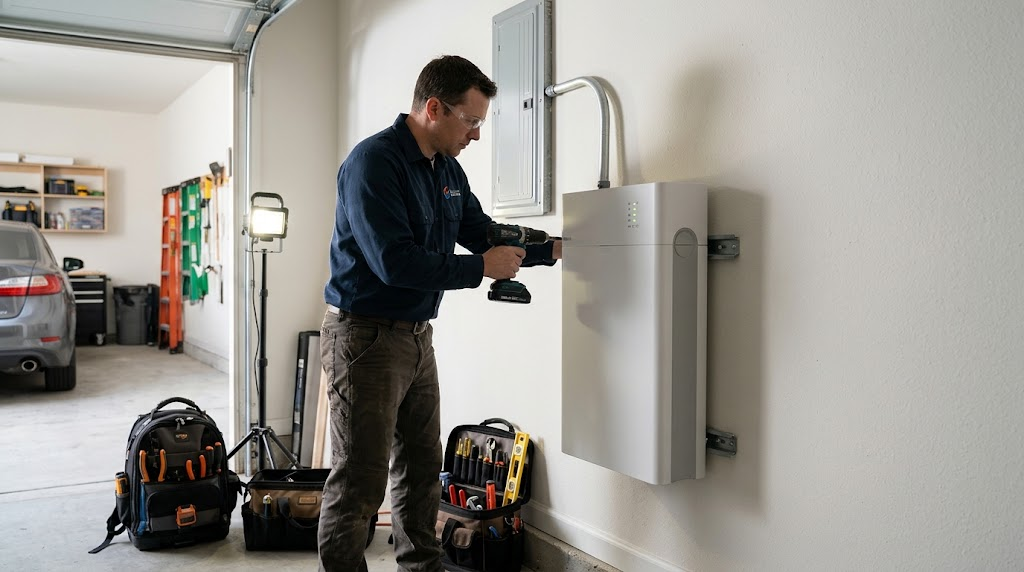
What Does a Residential Home Battery System Actually Cost in 2026?
To evaluate whether adding an energy storage system to your home makes financial sense, you must understand the complete installation equation, including equipment, high-voltage electrical hardware, and labor.
On average, installing a modern 10 kWh to 15 kWh residential battery storage system in late 2026 ranges between $9,500 and $15,000 before federal tax incentives:
- Battery Hardware Alone: High-quality lithium iron phosphate (LFP) home battery units—such as modern iterations of the Tesla Powerwall, Enphase IQ Battery, or SolarEdge Home Battery—cost between $7,000 and $10,500 for the physical energy storage hardware.
- Electrical Gateway and Smart Sub-Panels: Integrating a battery bank requires a dedicated automatic transfer switch and critical load sub-panel, adding $1,500 to $2,500 to equipment costs.
- Professional Installation and Permitting: Certified electricians must pull municipal building permits, install high-voltage conduit, and coordinate utility interconnection approvals, which typically runs between $2,000 and $3,500 depending on your home’s existing electrical service panel capacity.
The Federal Tax Credit and State Rebate Landscape
While an upfront price tag of $12,000 sounds substantial, generous federal and regional clean energy incentives drastically reduce the net investment.
Under ongoing federal clean energy provisions, residential energy storage systems qualify for substantial tax savings:
- The 30 Percent Federal Clean Energy Tax Credit: Homeowners can deduct a full 30 percent of the total installation and equipment cost of a home battery from their federal income tax liability. Crucially, federal rules allow standalone battery storage systems (systems with 3 kWh capacity or greater) to qualify for this 30 percent credit even if your home does not have rooftop solar panels.
- Net Out-of-Pocket Cost Reduction: On a $13,000 battery installation, the 30 percent federal tax credit reduces your effective cost by $3,900, bringing your net financial investment down to approximately $9,100.
- State and Utility Battery Rebates: In states with progressive energy programs (such as California’s SGIP, Massachusetts’ ConnectedSolutions, or Texas virtual power plant pilots), regional utilities offer additional cash rebates or annual cash bonuses for allowing your battery to discharge stored power back into the grid during summer heatwave emergencies.
Backup Power Realities: What Can a Home Battery Actually Run?
One of the most common misconceptions among first-time battery shoppers is assuming that a single wall-mounted battery can power an entire five-bedroom suburban house, including central air conditioning, indefinitely during a multi-day storm blackout.
A standard residential home battery provides approximately 10 to 13.5 kilowatt-hours (kWh) of usable stored energy:
- Critical Loads Backup (Single Battery): A single 13.5 kWh battery bank can easily power your essential household circuits—including your refrigerator, kitchen lighting, Wi-Fi router, laptop chargers, medical devices, well pump, and furnace blower fan—for twenty-four to thirty-six hours without recharging.
- Whole-Home Backup (Dual Batteries): If your goal is running power-hungry 240-volt appliances—such as central air conditioning, an electric clothes dryer, an induction stove, or an electric vehicle wall charger—you will need two to three connected battery units offering 25 to 40 kWh of storage, alongside smart load-shedding modules that automatically turn off heavy appliances when power runs low.
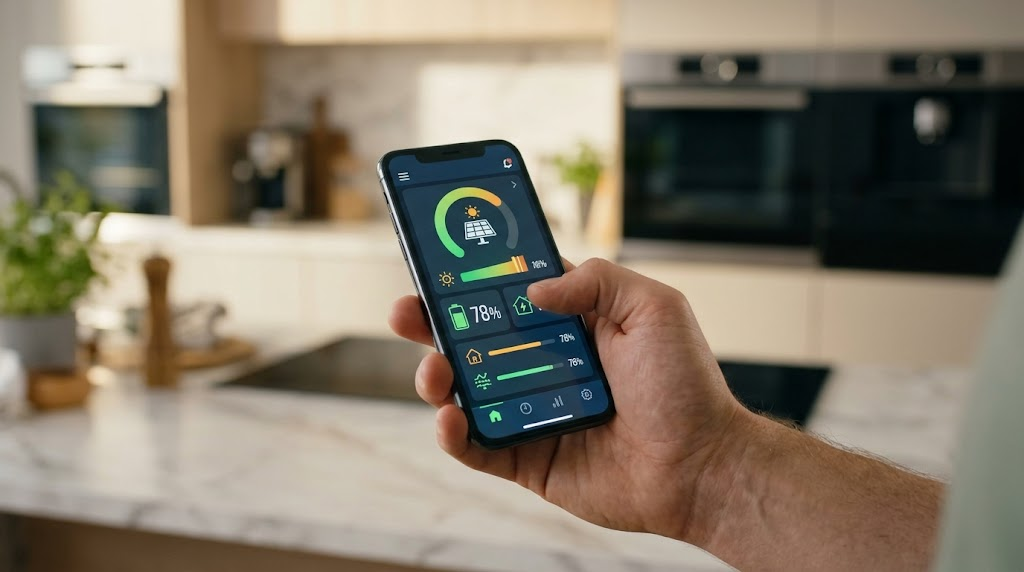
- Continuous Solar Recharging: When paired with rooftop solar panels, a home battery functions as a self-sustaining microgrid. During a prolonged multi-day grid blackout, solar panels recharge the battery bank during sunny daylight hours, allowing your household to draw stored clean energy through the night in an endless renewable loop.
Why LFP Battery Chemistry Has Changed the Industry
Earlier generations of home energy storage utilized nickel-manganese-cobalt (NMC) chemistries similar to those found in laptops and smartphones. While energy-dense, NMC batteries carried higher thermal degradation rates and safety concerns.
By late 2026, virtually all top-tier residential battery manufacturers have standardized on Lithium Iron Phosphate (LFP) technology:
- Exceptional Fire Safety: LFP chemistry is inherently non-combustible and thermally stable, eliminating the risk of thermal runaway fires even under extreme ambient temperatures.
- Remarkable Cycle Longevity: While older batteries degraded after 2,000 charge cycles, modern LFP units routinely deliver 6,000 to 10,000 full daily charge-and-discharge cycles while retaining over seventy percent of their original capacity.
- Daily 100% Cycling: LFP batteries can be charged to 100 percent and discharged down to zero every single day for ten to fifteen years without accelerated battery degradation.

4 Rules for Calculating Your Battery Return on Investment (ROI)
Before signing an installation contract with a solar or energy contractor, evaluate your financial payback using these four practical rules:
1. Check Your Local Utility’s Net Metering Rules
If your electrical utility still offers traditional 1-to-1 net metering (where they credit you full retail price for every kilowatt-hour of solar you export), a battery is primarily a storm backup luxury rather than a major money-saver. However, if your utility operates under updated net metering rules with minimal export credits (such as California’s NEM 3.0), storing your excess daytime solar power in a battery to use during expensive evening hours is mandatory to achieve strong financial payback.
2. Take Advantage of Time-of-Use (TOU) Rate Arbitrage
Many regional utilities charge vastly different rates for electricity depending on the time of day, charging up to 50 cents per kWh during peak late afternoon hours and only 15 cents overnight. Modern smart home batteries automatically automate rate arbitrage: charging when grid power is cheapest, and powering your home from stored battery power during peak pricing hours to eliminate expensive utility spikes.
3. Upgrade to a 200-Amp Main Electrical Panel If Needed
If your home still operates on an older 100-amp or 150-amp electrical service panel, adding a battery storage system may require an electrical panel upgrade. Factoring in an extra $2,000 to $3,500 for a modern smart 200-amp panel ensures your home’s infrastructure can handle the bidirectional energy flow safely.
4. Demand a 10-Year Comprehensive Performance Warranty
Ensure your installation contract includes a manufacturer warranty guaranteeing at least 70 percent energy capacity retention after 10 years, alongside an installer workmanship warranty covering roof penetrations and electrical junction points.