

The newly released Matter 1.4 smart home standard brings multi-admin Wi-Fi router integration, solar and heat pump support, and unified multi-platform controls.
If you have ever tried building a modern smart home, you know how quickly a simple project can turn into a headache of competing mobile apps, incompatible communication bridges, and confusing voice assistant setups.
For years, buying a smart thermostat, security camera, or automated light bulb meant carefully checking the retail box to verify whether it worked with Apple Home, Google Home, Amazon Alexa, or Samsung SmartThings. Even after the universal Matter smart home protocol was introduced to solve this exact problem, early iterations still suffered from clunky onboarding processes and limited device categories.
That friction is finally fading into the rearview mirror with the official rollout of the Matter 1.4 specification in late October 2026. Packed with major upgrades for home network routers, native support for heat pumps and residential solar systems, and a vastly improved Multi-Admin pairing experience, Matter 1.4 represents the most complete and practical smart home leap we have seen yet.
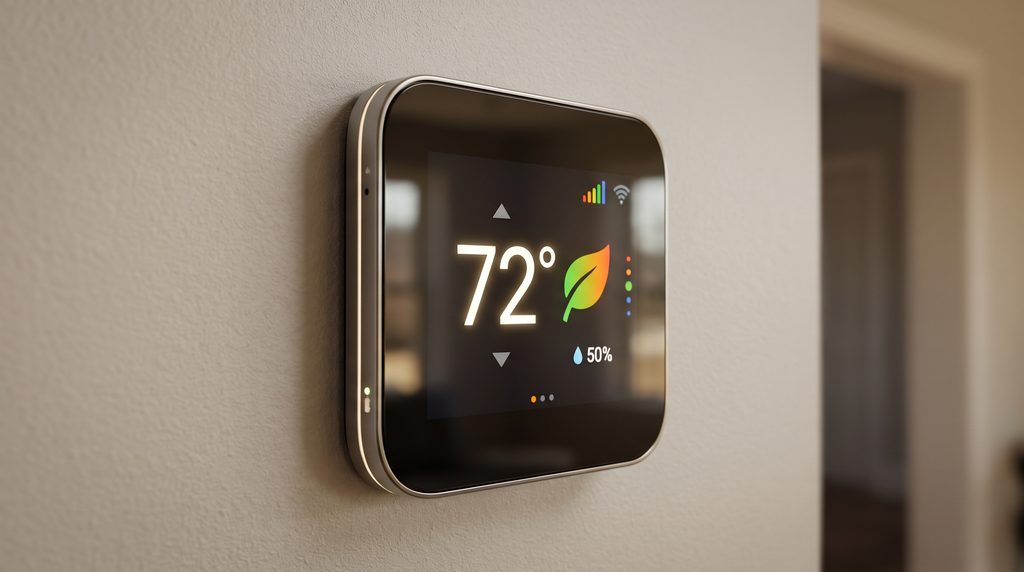
What Makes Matter 1.4 a Milestone for Home Automation?
At its core, Matter is an open-source connectivity standard created by hundreds of leading tech companies through the Connectivity Standards Alliance (CSA). Rather than forcing every smart gadget to connect to proprietary company cloud servers, Matter devices communicate locally across your existing home Wi-Fi and low-power Thread mesh networks.
Matter 1.4 addresses the biggest missing puzzle pieces that earlier versions left behind, turning disjointed smart gadgets into a genuinely cohesive home ecosystem.
Key Upgrades Introduced in Matter 1.4
Here is a breakdown of what the new standard brings to everyday living rooms and utility closets:
- Enhanced Multi-Admin Ecosystem Controls: Previously, sharing a Matter device between different mobile apps (like adding a smart lock to both Apple Home and Google Home) required tedious manual PIN entry. Matter 1.4 automates this background handshake, allowing you to grant multi-platform access with a single tap.
- Home Network Infrastructure (Routers & Access Points): Matter 1.4 allows certified Wi-Fi routers and mesh nodes to act as unified Thread border routers. Instead of needing a separate smart hub plugged into your wall for every brand, your home router can manage your Thread devices directly.
- Native Energy Management & Solar Support: The new specification introduces built-in communication standards for residential solar inverters, home battery storage systems, and electric vehicle wall chargers, allowing smart homes to automate power usage during peak grid pricing hours.
- Smart Heat Pumps and Water Heaters: Expanding beyond basic wall thermostats, Matter 1.4 includes native command sets for advanced variable-speed heat pumps, hybrid water heaters, and zoned ventilation systems.
Why Local Control Matters for Your Privacy and Reliability
The biggest fundamental advantage of the Matter architecture has always been local control. In the past, when you tapped a button on your smartphone to turn off the living room lamp, that command frequently traveled over your internet connection to a distant cloud server before pinging back to your lamp.
If your neighborhood internet provider experienced an outage, or if a manufacturer suddenly decided to shut down their cloud servers or put features behind a monthly subscription fee, your expensive smart home gadgets instantly turned into useless plastic paperweights.
The Power of Local Network Processing
With Matter 1.4 operating over local Wi-Fi and Thread mesh networks:
- Instantaneous response times: Commands travel directly across your local network in milliseconds, eliminating the awkward two-second delay common with cloud-based switches.
- Internet-independent reliability: Your automated lighting schedules, motion sensors, and smart door locks continue to function flawlessly even if your home broadband goes completely offline.
- Enhanced privacy protection: Because routine commands stay within your home network perimeter, your daily family movement habits and occupancy routines aren’t constantly being tracked and logged on corporate servers.
4 Practical Tips for Upgrading Your Smart Home in 2026
If you are planning to add new connected devices to your home before the holidays, keeping these four best practices in mind will ensure a smooth, future-proof setup:
1. Always Look for the Official Matter Logo on the Box
Don’t buy older smart plugs or light bulbs that only advertise legacy proprietary ecosystems. Purchasing hardware with the certified Matter logo ensures that your investment will work seamlessly across iOS, Android, Alexa, and future smart home platforms for years to come.
2. Build a Strong Thread Mesh Network
Thread is a low-power, self-healing wireless mesh protocol designed specifically for smart home sensors and switches. Every mains-powered Thread device (like a smart wall outlet or light switch) acts as a signal repeater, expanding coverage across your entire house. Adding a few Thread-enabled smart plugs in distant hallways ensures rock-solid connectivity for battery-operated door sensors and locks.
3. Check for Automatic Firmware Updates
Many popular smart home hubs—including recent Apple TV 4K boxes, Google Nest Hubs, and Amazon Echo speakers—will receive Matter 1.4 features through over-the-air software updates. Ensure your existing smart home controllers are connected to Wi-Fi and set to install automatic software updates.
4. Separate Your Smart Devices on a Guest Network
While Matter utilizes robust modern encryption protocols, separating your Internet of Things (IoT) gadgets onto a dedicated 2.4 GHz guest Wi-Fi network remains a top-tier cybersecurity best practice. This keeps your smart home hardware isolated from your personal laptops, smartphones, and financial files.
Frequently Asked Questions (FAQs)
1. What is the Matter 1.4 smart home standard?
Matter 1.4 is an update to the Matter smart home connectivity standard, designed to improve how compatible devices work together. Matter helps products from different manufacturers communicate through a shared framework, making it easier to build a smart home without relying on a single brand or ecosystem.
2. How does Matter 1.4 make connecting smart home devices easier?
Matter aims to simplify device setup and improve interoperability between supported products. Depending on the device and platform, users can connect compatible smart lights, locks, sensors, thermostats, and other accessories through supported smart home systems. However, specific features may require compatible hardware, software updates, or a suitable controller.
3. Do I need to replace my existing smart home devices to use Matter 1.4?
Not necessarily. Some existing devices may receive Matter support through software or firmware updates, while others may not be compatible. Before purchasing replacements, check the manufacturer’s compatibility information and confirm whether your current smart home hub, controller, and devices support the features you want.
4. Why is Matter 1.4 important for the future of smart homes?
Matter 1.4 supports the broader goal of making smart home technology more consistent across brands. Improved compatibility can give consumers more flexibility when choosing products and expanding their systems. As manufacturers adopt the standard, users may find it easier to manage different devices together, although compatibility and available features will still vary by product.