

Amazon reported $201.9 billion in Q3 2026 revenue, with AWS cloud sales surging 39.3% and operating income climbing 61% to a record-breaking $28.1 billion.
When technology skeptics spent the past three months questioning whether the multi-billion-dollar global investment in artificial intelligence would ever yield real profits, Amazon stepped up to the earnings microphone and delivered a resounding answer.
Reporting its third-quarter 2026 financial results after the closing bell, the Seattle-based technology and e-commerce giant reported net revenue of $201.9 billion—a 12 percent increase year-over-year that easily surpassed Wall Street expectations. Even more impressive to institutional investors, Amazon’s operating income skyrocketed by 61 percent to reach an all-time company record of $28.1 billion, pushing operating profit margins to an unprecedented 13.9 percent.
At the heart of this financial performance is Amazon Web Services (AWS), the global cloud computing division that has firmly re-accelerated its growth trajectory, posting a blistering 39.3 percent year-over-year revenue expansion driven by enterprise artificial intelligence adoption.
The AWS Acceleration: Cloud Computing Enters a New Era
For several quarters, Wall Street debates focused on whether cloud infrastructure growth was maturing into a slower, utility-like phase. Amazon’s third-quarter disclosures completely dismantled that thesis.
The cloud division didn’t just meet expectations; it experienced its fastest pace of expansion in more than three years:
- 39.3 Percent Cloud Revenue Growth: Accelerating for the sixth consecutive fiscal quarter as enterprise customers migrate legacy workloads into custom cloud environments.
- $578 Billion Backlog: Accumulating a forward-looking enterprise contract backlog that grew by triple digits compared to the same period last year.
- Projected $1 Trillion Valuation Run-Rate: Corporate leadership outlined internal projections indicating AWS is on pace to maintain annual growth exceeding 40 percent through 2027 and 2028, with long-term potential to reach one trillion dollars in annual revenue within the coming decade.
- Massive Generative AI Adoption: Token consumption volume across Amazon Bedrock expanded nearly seventeen times year-over-year, with Fortune 500 enterprises spending nearly seven times more on proprietary model training and inference.
Retail Efficiency and Logistics Optimization
While cloud computing generated the headlines, Amazon’s retail and advertising businesses demonstrated exceptional operational discipline. In contrast to retail competitors struggling with consumer price resistance, Amazon added more than $90 billion in gross merchandise sales over the trailing twelve months.
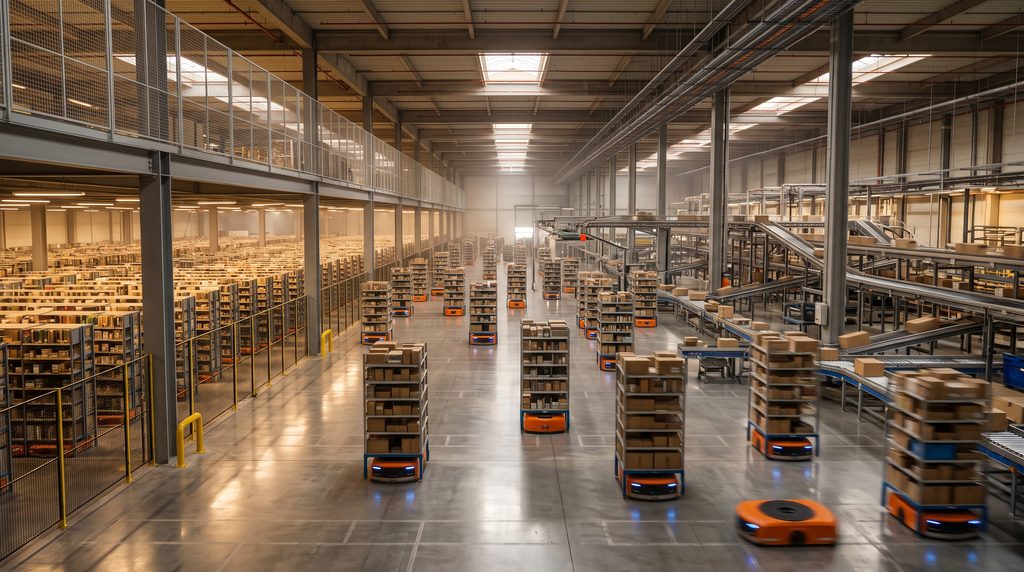
A major driver behind this margin expansion has been the ongoing regionalization of fulfillment centers. By placing high-demand inventory closer to major metropolitan neighborhoods, Amazon decreased its shipping cost-to-serve per unit for the fourth consecutive year, while driving physical delivery speeds to record highs for Prime members.
Furthermore, high-margin revenue streams continue to diversify the balance sheet:
- Everyday Essentials and Grocery: Online grocery and everyday household essentials grew three times faster than general merchandise categories.
- Amazon Pharmacy Expansion: Active customers using digital pharmacy prescriptions jumped more than 60 percent year-over-year.
- High-Margin Digital Advertising: Sponsored brand advertising and Prime Video streaming ads delivered robust double-digit growth with minimal capital overhead.

Capital Spending and the Hardware Infrastructure Race
To sustain this cloud momentum, Amazon confirmed that full-year capital expenditures will remain elevated, with tens of billions allocated toward custom silicon, liquid-cooled data center racks, and long-term nuclear and renewable energy power contracts.
Rather than relying entirely on third-party graphics processors, Amazon’s proprietary Trainium and Inferentia custom AI chips have seen rapid enterprise adoption. By offering cloud clients up to forty percent better price-to-performance ratios for training and running complex neural networks, Amazon has insulated its cloud margins against semiconductor supply bottlenecks.
4 Essential Lessons for Long-Term Investors
Amazon’s third-quarter scorecard offers valuable perspective for navigating equity markets heading into 2027:
- Cash Flow Beats Hype Every Time: Generating $28.1 billion in quarterly operating income proves that companies with diversified business models can fund historic technological transitions without sacrificing liquidity.
- Cloud Infrastructure Is the Digital Utility of the 21st Century: Just as electrical grids and telecom towers formed the backbone of the industrial age, hyperscale cloud data centers are the mandatory foundation for all future software.
- Margin Expansion Matters More Than Top-Line Spikes: Achieving a record 13.9 percent operating margin demonstrates that automation, robotics, and regional logistics are actively lowering operating overhead.
- Stay Patient Through Tech Volatility: Short-term stock fluctuations frequently obscure multi-year secular growth trends; businesses expanding their competitive moats remain the cornerstone of patient wealth building.
Frequently Asked Questions (FAQs)
1. How much revenue did Amazon generate in Q3 2026?
Amazon reported approximately $201.9 billion in total net sales for the third quarter of 2026, representing a 12% increase compared with the same quarter in 2025.
2. How much revenue did Amazon Web Services (AWS) generate in Q3 2026?
AWS generated approximately $46 billion in quarterly revenue, marking a 39.3% increase compared with the previous year.
3. Why is AWS growing so quickly in 2026?
AWS growth is supported by increasing demand for cloud computing, artificial intelligence infrastructure, data storage, and enterprise technology services. Businesses are using cloud platforms to develop and operate increasingly sophisticated AI applications.
4. What was Amazon’s operating income in the third quarter of 2026?
Amazon reported operating income of approximately $28.1 billion, compared with $17.4 billion in the third quarter of 2025.
5. Did Amazon’s net income increase in Q3 2026?
No. Amazon’s net income was approximately $20.7 billion, compared with $21.2 billion during the same quarter last year. The company attributed much of the decrease to significant investment-related gains recorded in the previous year’s quarter.
6. How much is AWS worth in annualized revenue?
Based on its Q3 2026 revenue, AWS reached an annualized revenue run rate of approximately $184 billion. This figure represents an estimate based on its quarterly sales pace, not its actual annual revenue.
7. How is artificial intelligence affecting Amazon’s financial performance?
AI is creating additional demand for AWS computing services, but supporting that demand requires major investments in data centers, processors, networking, and other infrastructure. Amazon said its increased infrastructure spending, particularly for AI, contributed to lower trailing 12-month free cash flow.
8. What are Amazon’s revenue expectations for Q4 2026?
Amazon expects fourth-quarter 2026 net sales to reach between $240 billion and $247 billion. The company estimates year-over-year revenue growth of approximately 12% to 16%, although actual results may vary.