
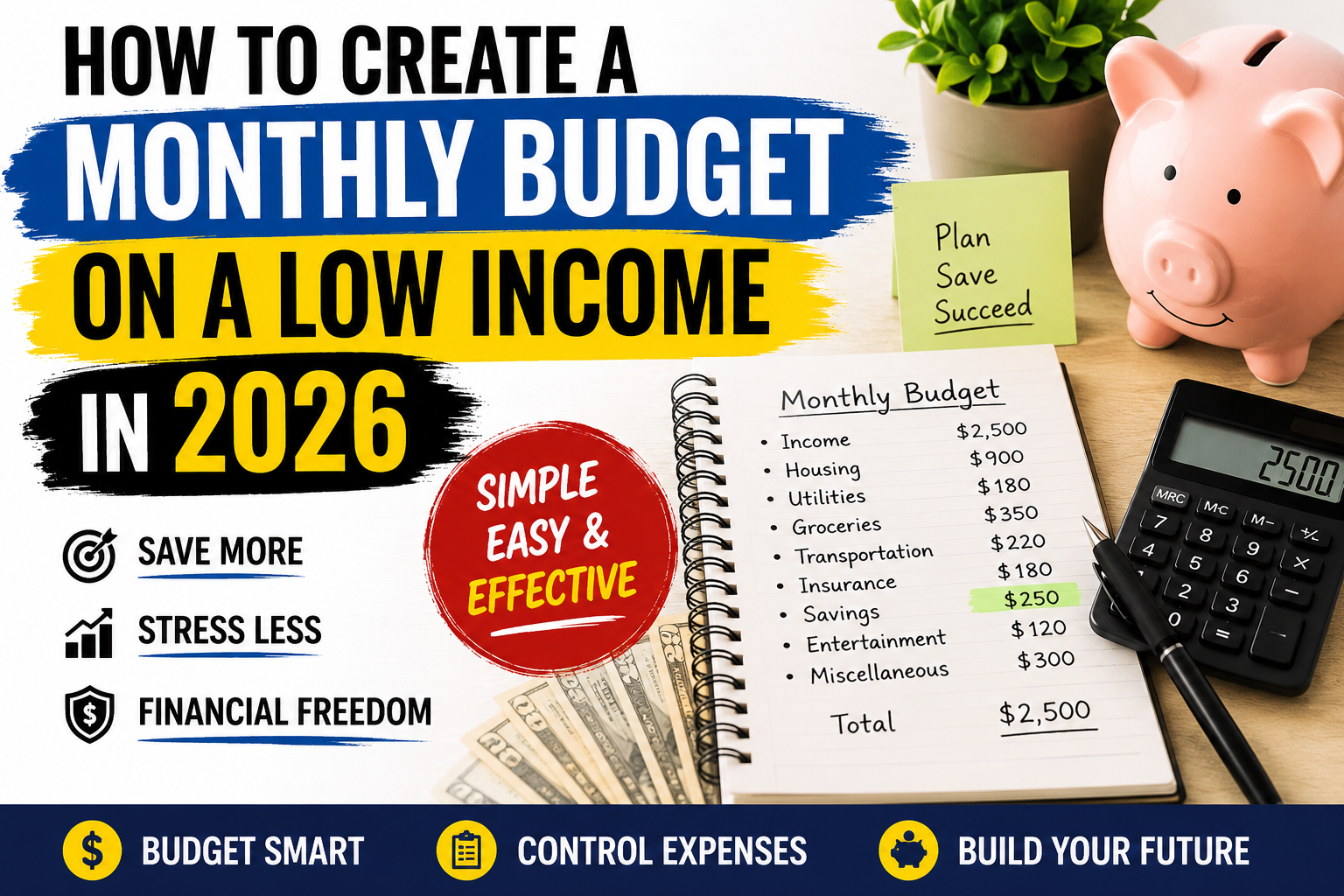
How to Create a Monthly Budget on a Low Income in 2026
Living on a low income in the United States has become more challenging in 2026 due to rising housing costs, groceries, transportation, and healthcare expenses. However, creating a smart monthly budget can help you take control of your money, reduce financial stress, and build long-term stability.
The good news? You don’t need a high salary to improve your finances. You simply need a realistic plan that helps every dollar work for you.
Why Budgeting Matters More Than Ever in 2026

6
Budgeting is no longer just about saving money. It’s about financial survival and creating opportunities for the future.
Benefits include:
- Reduce financial stress
- Avoid unnecessary debt
- Build an emergency fund
- Improve your credit habits
- Reach savings goals faster
- Feel more confident about your finances
Step 1: Calculate Your Monthly Income

5
Start with your actual take-home pay after taxes.
Include:
- Salary
- Freelance income
- Side hustle earnings
- Government assistance
- Child support
- Other reliable monthly income
Knowing your exact monthly income helps you create a realistic budget.
Step 2: List Every Monthly Expense

5
Separate expenses into two categories.
Fixed Expenses
- Rent
- Utilities
- Insurance
- Internet
- Phone bill
- Car payment
Variable Expenses
- Groceries
- Gas
- Entertainment
- Eating out
- Shopping
- Personal care
Tracking every expense shows where your money is actually going.
Step 3: Follow the 50/30/20 Rule (Adjust if Needed)

6
If your income is limited, modify this popular budgeting strategy.
Example:
- 60% Needs
- 20% Savings
- 20% Wants
If money is very tight, even saving 5–10% every month is a great start.
Step 4: Cut Unnecessary Spending

5
Easy ways to save money:
- Cancel unused subscriptions
- Cook meals at home
- Buy generic brands
- Use coupons
- Shop during sales
- Avoid impulse purchases
- Compare prices before buying
Small daily savings become significant over time.
Step 5: Build an Emergency Fund

7
Unexpected expenses happen.
Aim to save:
- First Goal: $500
- Next Goal: 1 Month of Expenses
- Long-Term Goal: 3–6 Months of Living Expenses
An emergency fund protects you from relying on credit cards.
Step 6: Use Free Budgeting Apps

7
Popular budgeting tools include:
- EveryDollar
- Goodbudget
- Rocket Money
- PocketGuard
- Monarch Money
These apps help you monitor spending automatically.
Step 7: Increase Your Income

8
Saving money is important—but earning more is powerful too.
Ideas include:
- Freelancing
- Food delivery
- Online tutoring
- Selling digital products
- Virtual assistant work
- Weekend side jobs
Even an extra $200–500 per month can make a noticeable difference.
Sample Monthly Budget (USA)
| Category | Amount |
|---|---|
| Income | $2,500 |
| Housing | $900 |
| Utilities | $180 |
| Groceries | $350 |
| Transportation | $220 |
| Insurance | $180 |
| Savings | $250 |
| Entertainment | $120 |
| Miscellaneous | $300 |
Common Budgeting Mistakes
Avoid these common mistakes:
- Not tracking expenses
- Overspending on food delivery
- Ignoring emergency savings
- Using credit cards carelessly
- Not reviewing your budget monthly