
U.S. flights are returning to normal after a rare nationwide FAA ground stop caused by a fiber-optic upgrade router fault. Learn what happened and traveler rights.
Airports across the United States are finally breathing a sigh of relief today as commercial airline schedules return to normal following one of the most disruptive aviation shutdowns in modern American history. After a tense weekend that saw more than 11,500 flights delayed or canceled on Sunday alone, federal aviation officials confirmed that national airspace operations have stabilized ahead of the busy Thanksgiving travel rush.
The chaos began late Friday afternoon, November 13, when the Federal Aviation Administration (FAA) issued a rare nationwide ground stop—halting departures across the country for four hours and 21 minutes. It marked the longest nationwide grounding of U.S. flights since September 11, 2001, stranding hundreds of thousands of travelers, scrambling airline crews across time zones, and even prompting temporary suspensions of transatlantic flights departing from Europe.
Now that planes are back in the sky on Monday morning, federal investigators and lawmakers are zeroing in on a surprisingly small culprit behind the massive breakdown: an aging telecommunications network and a single malfunctioning router during a routine hardware upgrade.
What Actually Triggered the Nationwide Ground Stop?
When flights abruptly stopped taking off at 3:54 p.m. Eastern Time on Friday, speculation immediately swirled around potential cyberattacks or software glitches. However, briefings from U.S. Transportation Secretary Sean Duffy and FAA Administrator Bryan Bedford over the weekend pointed toward a much more grounded infrastructure failure.
Here is how the chain reaction unfolded:
- Copper-to-Fiber Upgrade Gone Wrong: A government telecommunications contractor, L3Harris Technologies, was performing routine maintenance at a remote FAA facility in southern Arkansas, with secondary work in Texas, replacing decades-old copper wiring with modern fiber-optic cables.
- The Rogue Router: During the upgrade, a newly installed network router malfunctioned and began flooding the FAA’s Telecommunications Infrastructure with roughly 1,000 connection attempts every four to five seconds.
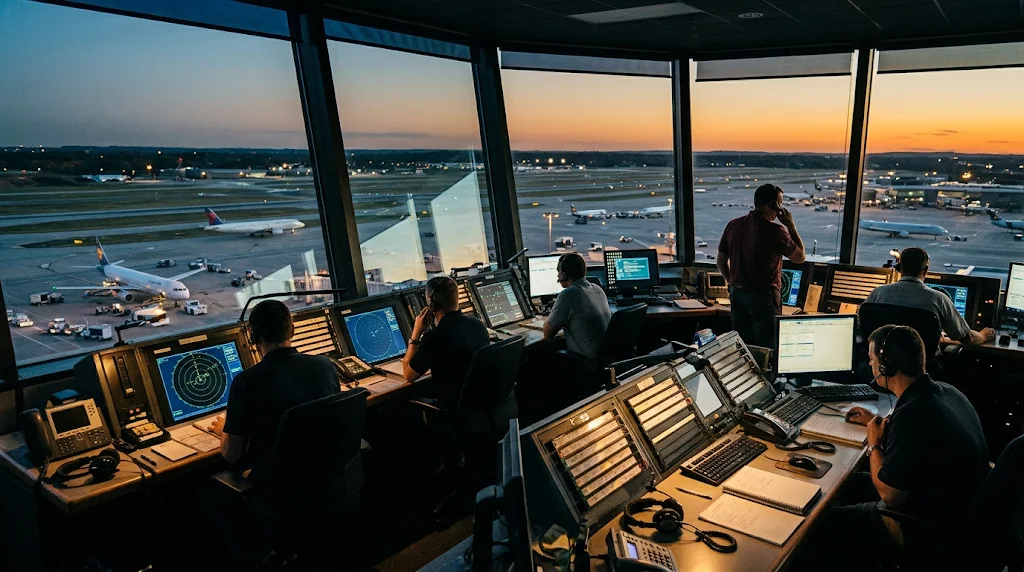
- System-Wide Overload: That relentless flood of data requests overwhelmed neighboring switches and routers, destabilizing voice communications and radar feeds across 17 of the nation’s 22 air route traffic control centers.
- Safety First: While aircraft already in the air were safely guided to their destinations using backup systems, controllers could not guarantee clean radar and radio handoffs for new departures—forcing the FAA to halt takeoffs nationwide until the faulty router was isolated and shut down at 8:15 p.m. Eastern Time.
Federal homeland security officials emphasized that there was never any evidence of a cyberattack, and aviation leaders clarified that the outage had nothing to do with the FAA’s newly expanded AI traffic management tool.
Why a Four-Hour Pause Created Three Days of Travel Chaos
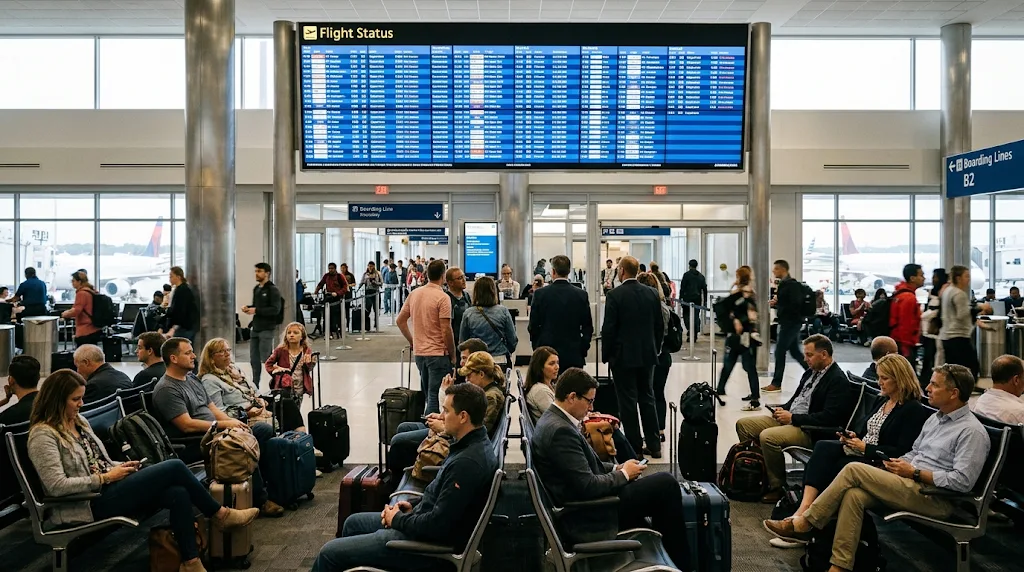
Many travelers wondered why a four-hour ground stop on Friday evening was still causing thousands of cancellations on Sunday night. Modern airline scheduling operates like an intricate web of interlocking dominoes, and knocking over just one piece creates massive ripple effects.
Displaced Aircraft and Stranded Crews
Airlines rely on tight turnaround windows. A jet scheduled to fly from Chicago to Miami on Friday afternoon might be slated to fly onward to Boston, then Dallas, then Denver over the next 24 hours. When thousands of planes are frozen at the wrong airports—and flight attendants and pilots hit strict federal duty-time limits while waiting on the tarmac—airlines cannot simply flip a switch and resume normal departures.
Transatlantic and International Bottlenecks
Because European air traffic control authorities temporarily paused U.S.-bound departures from 42 member states during the Friday night crisis, major international hubs like London Heathrow saw dozens of cancellations. Long-haul widebody aircraft and international crews had to be repositioned before overseas routes could return to full capacity.
Spillover onto Rail Networks
With airports jammed and standby lists stretching hundreds of passengers deep, stranded travelers turned to alternative transit. Amtrak saw an immediate surge in bookings along busy corridors, triggering temporary reservation bottlenecks as rail systems absorbed unexpected demand.
The Bigger Problem: America’s Aging Air Traffic Infrastructure
Friday’s meltdown exposed an uncomfortable truth that aviation experts have warned about for years: the backbone of America’s air traffic control network still relies heavily on legacy hardware, including miles of outdated copper telecommunications lines.
Contractor teams have currently completed roughly 70 percent of a multi-year effort to convert old copper lines to high-speed fiber optics. Yet the remaining legacy links create single points of failure where a routine maintenance swap can cascade across multiple regional control centers.
In the wake of the shutdown, Transportation Secretary Sean Duffy and congressional leaders moved quickly to push for a massive $50 billion infrastructure overhaul to modernize air traffic control communications, radar systems, and facility hardware. Just one day before the outage, officials had already been lobbying Congress for $30 billion in dedicated upgrades—making Friday’s disruption an undeniable wake-up call ahead of holiday peak travel.
Practical Steps for Travelers Flying This Week
Although airline operations are largely back on schedule today, November 16, scattered residual delays can still pop up at major hub airports while carriers clear final passenger backlogs. If you have a trip booked this week—or are planning travel for Thanksgiving—keep these smart precautions in mind:
1. Monitor Your Inbound Aircraft
Do not just check whether your flight is listed as “On Time.” Use your airline’s mobile app to track where your actual plane is coming from. If the inbound aircraft is delayed two legs earlier, your departure will likely slip as well.
2. Know Your Rebooking and Refund Rights
Under federal Department of Transportation rules, if an airline cancels your flight or imposes a significant schedule change and you choose not to travel, you are entitled to a full cash refund—not just a travel voucher—even on non-refundable basic economy tickets.
3. Build Extra Buffer Time for Connections
With planes running fuller than usual as airlines seat rebooked passengers, tight 40-minute layovers carry extra risk. Whenever possible, book morning departures, which historically suffer fewer cascading delays than late-afternoon flights, and aim for at least 75 to 90 minutes between connecting legs.
4. Keep Receipts for Unexpected Expenses
While airlines typically classify FAA-mandated ground stops as events outside carrier control—meaning meal and hotel vouchers are not automatically guaranteed—checking your travel credit card’s trip delay insurance policy can save you hundreds of dollars. Many major rewards cards reimburse hotel stays, meals, and ground transit after a six-to-twelve-hour delay.
Looking Ahead to the Thanksgiving Travel Rush
The timing of Friday’s outage could hardly have been closer to the busiest travel week of the entire year. Millions of Americans are preparing to fly next week for Thanksgiving, putting maximum strain on runways, TSA checkpoints, and air traffic control towers.
Aviation officials have reassured the public that the faulty router has been permanently removed from service and that extra diagnostic safeguards are now active across regional control centers. For flyers, Monday’s steady return to normal schedules brings welcome relief—and a timely reminder of why modernizing America’s skies can no longer wait.