
A new American Heart Association report released Nov. 23, 2026, projects U.S. stroke survivors will nearly double to 20 million by 2050, with sharp rises in adults under 45.
A major scientific statement published today, November 23, 2026, by the American Heart Association delivers a sobering warning about the future of brain and cardiovascular health in the United States. According to the new projection—published in the peer-reviewed journal Stroke—nearly 20 million U.S. adults are expected to be living with the effects of a stroke by 2050, almost double today’s total.
Even more alarming than the overall surge is who is driving the fastest growth. Contrary to the longstanding assumption that stroke is strictly an older-adult crisis, researchers found that adults under age 45 are projected to experience the steepest relative jump in stroke prevalence over the next two decades. At the same time, the nation’s annual economic burden from stroke—covering direct medical bills, long-term rehabilitation, and lost workplace productivity—is forecast to climb more than fivefold, surging from roughly $65 billion today to nearly $423 billion annually by 2050.
With earlier onset of high blood pressure, obesity, and Type 2 diabetes quietly affecting millions of working-age Americans, understanding what is driving these projections—and which daily habits actually reverse the risk—has never been more urgent.
Why Younger Adults (Ages 20–44) Are Seeing the Fastest Surge
For generations, most people in their twenties and thirties dismissed blood pressure readings or elevated blood sugar as problems to worry about in retirement. Today’s new scientific modeling shows why delaying action can carry lifelong consequences during prime working and parenting years.
- Tenfold Cost Explosion for Young Adults: Among U.S. adults aged 20 to 44, annual stroke-related costs are projected to grow more than tenfold, jumping from $7.9 billion to $84.4 billion by 2050.
- Peak Working-Age Burden: Meanwhile, adults aged 45 to 64 are expected to account for the largest overall share of national stroke expenses, reaching roughly $142 billion every year.
- Real-World Consequences: Stroke doesn’t just threaten survival; it frequently disrupts vision, speech, memory, and physical mobility—forcing active parents, coaches, and mid-career professionals out of the workforce decades before retirement.
- Silent Risk Factors Starting Earlier: Cardiologists and vascular neurologists point directly to rising rates of untreated hypertension (high blood pressure), metabolic syndrome, sedentary desk routines, and Type 2 diabetes among Millennials and Gen Z adults as primary fuel behind the trend.
As vascular neurologists emphasized in today’s report, high blood pressure rarely causes pain or obvious symptoms until an emergency strikes—leading far too many 30- and 40-year-olds to postpone medication or lifestyle changes until it is too late.
Disparities Across Communities and Why Women Face Higher Lifetime Numbers
The 2050 projections also highlight persistent health gaps across American communities that demand earlier screening and broader access to preventive care:
Rapid Growth Among Asian and Hispanic Adults
- Sharpest Relative Increases: Among young adults specifically, the number of people living after a stroke is projected to more than quadruple in the Hispanic population and increase more than sixfold among Asian Americans by 2050.
- Steep Cost Multipliers: Total stroke-related financial burdens for both Asian and Hispanic communities are projected to climb more than tenfold over the coming quarter-century.
Highest Overall Prevalence
- Continuing Disparities: Black, American Indian, Alaska Native, and multiracial adults are projected to continue experiencing the highest overall rates of stroke across the United States—compounded by higher rates of hypertension alongside barriers to routine primary care, health insurance, and specialized emergency stroke units.
Women’s Unique Risk Profile
- 10.4 Million Women vs. 9 Million Men: By 2050, researchers estimate 10.4 million women and 9 million men will be living after a stroke. Beyond longer average life expectancy, women face distinct sex-specific risk factors across their lifespan, including pregnancy-related blood pressure complications (such as preeclampsia), early menopause, and higher lifetime rates of atrial fibrillation (AFib), an irregular heart rhythm that can send blood clots directly to the brain.
Why Stroke Numbers Are Rising Even as Treatment Improves
At first glance, the projection of 20 million stroke survivors might sound contradictory given decades of public health progress—fewer Americans smoke today, and emergency hospital care has improved dramatically.
According to the report’s authors, three structural forces explain why total prevalence and healthcare spending are rising simultaneously:
- An Aging U.S. Population: Because individual stroke risk rises steeply with age, the massive cohort of Baby Boomers and Gen X Americans moving into their 70s and 80s naturally increases total case numbers.
- Higher Survival From Heart Attacks and Strokes: Better cardiac care means more people survive earlier heart events and reach ages where stroke risk climbs—and advanced emergency clot-busting medications and mechanical thrombectomy procedures mean far more people survive a stroke and live for decades afterward.
- Rising Cost of Advanced Brain Imaging and Rehab: Modern neuroimaging, specialized neuro-ICU care, and long-term physical, speech, and cognitive rehabilitation push per-person lifetime costs sharply higher—projected to nearly triple per survivor by 2050.

“These Projections Are Not Inevitable”: Eight Proven Ways to Cut Your Risk
Crucially, the researchers behind today’s report stressed that these 2050 numbers are a warning—not a fixed destiny. Today’s statistical models did not yet factor in the potential long-term impact of newer metabolic and obesity therapies or aggressive early prevention programs.
Up to 80 percent of strokes are considered preventable through consistent management of everyday cardiovascular risk factors. Following the American Heart Association’s Life’s Essential 8 framework offers a practical, evidence-backed checklist for adults of every age:
1. Know and Control Your Blood Pressure
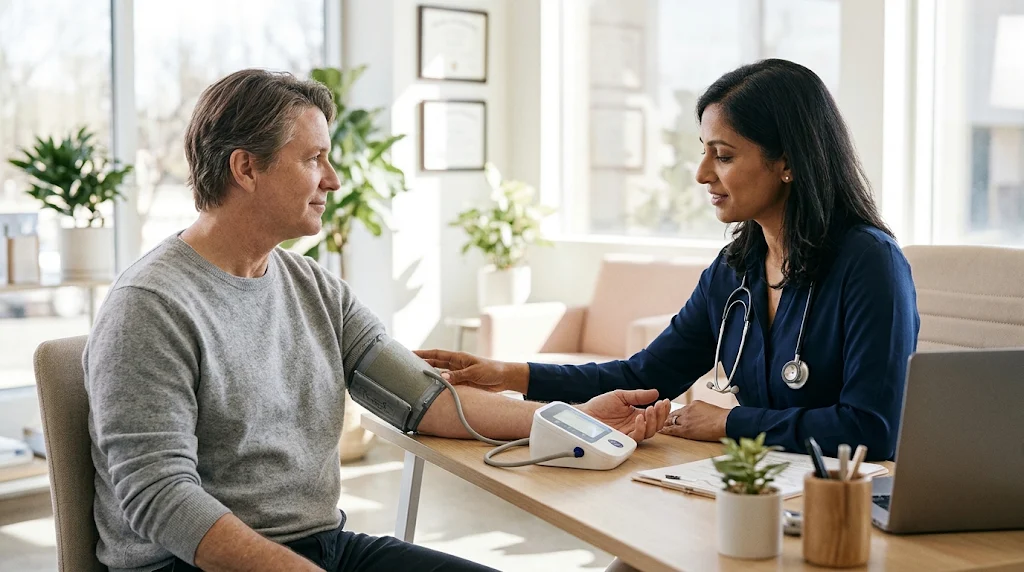
High blood pressure is the single strongest controllable driver of both ischemic (clot-caused) and hemorrhagic (bleeding) strokes. Aim to keep readings below 120/80 mm Hg. If a doctor prescribes blood pressure medication, take it consistently every day—never wait “until after the holidays” or until you feel symptoms.
2. Manage Blood Sugar Early
Elevated fasting glucose and insulin resistance quietly stiffen and inflame blood vessels supplying the brain. Routine annual A1C blood tests help catch prediabetes years before complications develop.
3. Keep Cholesterol in Check
Lowering LDL (“bad”) cholesterol reduces fatty plaque buildup inside carotid and cerebral arteries, cutting clot risk substantially.
4. Move Consistently—Not Just on Weekends
Aim for at least 150 minutes of moderate aerobic activity per week—such as brisk 30-minute walks five mornings a week—paired with two days of light strength training.
5. Shift Toward Whole, Unprocessed Foods
Eating a Mediterranean-style pattern rich in leafy greens, berries, olive oil, wild fish, nuts, beans, and whole grains naturally lowers sodium load while supporting elastic, healthy blood vessels.
6. Eliminate Tobacco and Vaping
Smoking damages blood vessel linings and thickens blood, doubling stroke risk; quitting begins lowering cardiovascular danger within weeks.
7. Protect Quality Sleep
Consistently getting 7 to 9 hours of restful sleep—and treating loud snoring or sleep apnea—prevents nighttime blood pressure spikes that strain cerebral arteries.
8. Maintain a Healthy Weight
Even a modest 5 to 10 percent reduction in excess body weight measurably lowers blood pressure, improves blood sugar sensitivity, and eases vascular inflammation.

Knowing the Warning Signs: Why Every Minute Counts (F.A.S.T.)
Because brain cells lose oxygen rapidly during a stroke, recognizing early symptoms and calling 911 immediately—rather than driving yourself or waiting to see if numbness fades—can mean the difference between full recovery and permanent disability. Memorize F.A.S.T.:
- F — Face Drooping: Does one side of the face droop or feel numb when the person smiles?
- A — Arm Weakness: Is one arm weak or drifting downward when both arms are raised?
- S — Speech Difficulty: Is speech slurred, garbled, or unusually hard to understand?
- T — Time to Call 911: Note the exact time symptoms first started and call emergency services right away.